
An interview from the Alysphere Podcast
Some conversations don’t rush you toward conclusions. They invite you to slow down, listen more closely, and sit with ideas for a while. This episode of the Alysphere Podcast does exactly that.
In this conversation, host Aly Foley Contreras speaks with Alex Chang, founder of Fresco Tours, about the Camino de Santiago, an ancient pilgrimage that continues to resonate deeply in our modern, hyper-connected world. What begins as a discussion about travel gradually opens into a reflection on simplicity, community, identity, and the quiet clarity that can emerge when life is stripped down to its essentials.
Meet Alex Chang
Alex Chang is the founder and CEO of Fresco Tours, a tour operator specializing in cultural walking tours along the Camino de Santiago and across Spain. Born in the United States and based in Spain since the mid-1990s, Alex has spent nearly two decades guiding travelers along one of Europe’s most historic paths.
As Fresco Tours approaches its 20th anniversary, Alex reflects not only on the company’s growth but also on the deeper meaning behind his work: helping people experience Spain, and themselves, through walking, shared stories, and human connection.
About the Conversation
This episode explores why the Camino de Santiago has endured for more than a thousand years, and why it feels especially relevant today.
Alex and Aly talk about the power of walking as a form of reflection, the way the Camino creates an unexpected sense of equality among strangers, and why so many people return home changed, even if they didn’t set out looking for transformation.
At its core, the conversation is about slowing down and trusting the journey, even when you don’t fully know what you’re walking toward.
🎧 Listen to the full episode on the Alysphere Podcast (Spotify)
🎧 Listen to the full episode on the Alysphere Podcast (Apple Podcasts)
The Interview
How did your journey from the U.S. to Spain begin?
After university, I was working in marketing research in Connecticut. It was the classic corporate rhythm, arriving at the office before sunrise, leaving after dark. After a few years, I realized there had to be more to life than that routine.
Spain had stayed with me since a study-abroad experience in Madrid, and when I decided to make a change, it felt like the right place to land. One of the biggest shifts for me was cultural. In Spain, people work to live, not live to work. That change in perspective reshaped how I understood time, success, and quality of life.
For someone unfamiliar with it, what is the Camino de Santiago?
Traditionally, the Camino is one of the most important pilgrimage routes in Christianity, leading to Santiago de Compostela in northwest Spain, where the remains of Saint James the Greater, one of Christ’s twelve apostles, are believed to rest.
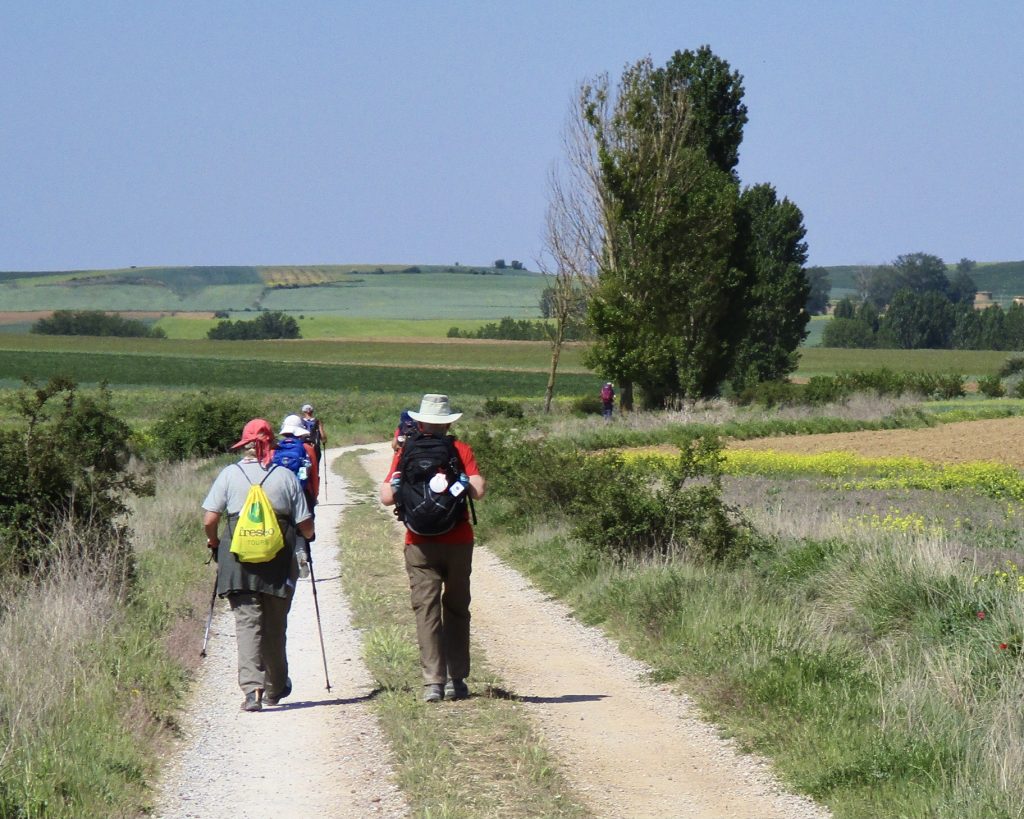
Today, people walk the Camino for many reasons, religious, spiritual, personal, cultural, or simply because they feel drawn to it. What makes it special is its simplicity. Each day revolves around one basic task: finding the arrows and walking.
Why does the Camino feel so transformative for so many people?
Because it removes much of the noise of everyday life. You walk for hours, often in silence. The experience becomes meditative. You’re outside, moving, breathing, and paying attention to what’s around you.
When life becomes that simple, insights tend to surface on their own. You don’t have to chase them, they arrive naturally.
How has the Camino changed over the years?
When Alex first walked the Camino in 1999, around 50,000 people completed it each year. Today, that number exceeds half a million. It has become far more international, with walkers arriving from North America, South America, Asia, and beyond.
And yet, one essential thing hasn’t changed.
“On the Camino, it doesn’t matter your age, your job, your religion, or how much money you have. Everyone is just a pilgrim.”
That sense of equality is rare. There are no status symbols, no hierarchy, just people walking the same path, sharing the same effort. Along the way, a quiet community forms: pilgrims looking out for one another, offering help when it’s needed, sharing advice, encouragement, or simply a greeting of Buen Camino.
It’s a reminder that even among strangers, we’re capable of moving forward together.
Has technology changed the experience?
Technology is more present now, but the Camino itself doesn’t demand connection. The routes are well marked. During the day, pilgrims tend to be more tuned into the landscape than their screens.
In the evenings, communal meals and conversations still happen. Stories are shared. Friendships form quickly. No technology can replace that part of the journey.
“You can have a phone in your pocket, but you still have to walk every step yourself.”
Do people usually walk alone or in groups?
Both. Walking alone often leads to more connection than people expect. You meet others naturally along the way and possibly are more open to these spontaneous encounters then when walking with friends. Groups and families are increasingly common too—parents and children, siblings, even multi-generational families.
The Camino allows you to be together without being on top of each other. You can take space when you need it and reconnect later. People often worry about being alone, but that rarely happens. Pilgrims work like magnets, and end up walking and talking together.
Why do people keep coming back?
There’s something deeply magnetic about the Camino. Many people walk it once and feel the pull to return. Some come back year after year, walking different sections over time.
For Alex, even after leading more than a hundred tours, arriving in Santiago still gives him goosebumps. That feeling never really fades.
Final Thoughts
The Camino de Santiago isn’t just about reaching a destination. It’s about what happens when life becomes simple enough for clarity to emerge. It’s about walking alongside strangers who quickly feel like family, and remembering how powerful shared experiences can be.
This conversation is a reminder that sometimes all we need is a direction, a willingness to keep walking, and the openness to see what unfolds along the way.
🎧 Listen to the full episode on the Alysphere Podcast (Spotify)
🎧 Listen to the full episode on the Alysphere Podcast (Apple Podcasts)