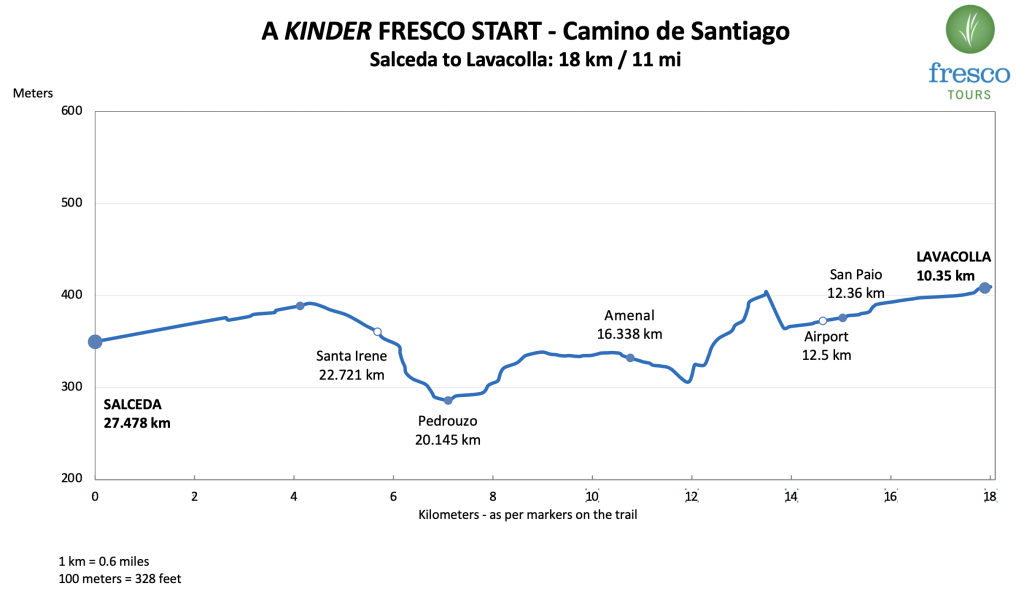
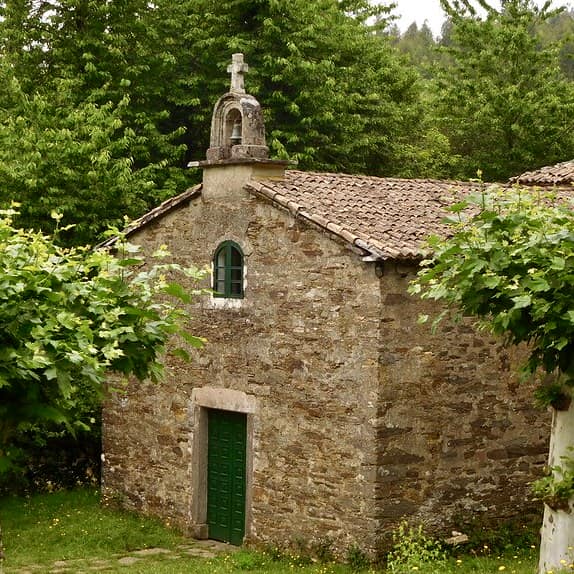
After breakfast, you reach the hamlet of Santa Irene, sheltered amongst green trees and winding paths. The town is named after Saint Irene of Tancor, a Portuguese woman who lived in the early medieval ages. At an early age she decided to become a nun, though this did not sit well with her tutor, the evil monk Remigius. Remigius gave her a potion that made her belly swell and appear pregnant, though this enraged her suitor Britald, who hired an assassin who promptly killed her and threw her body into the Tagus. Her uncle, who had received a revelation about what had really happened, found her uncorrupted body in the river and took it to the local town of Santarem, where it would be venerated. The town houses a small 18th-century chapel and a fountain with supposedly curative waters for crying babies and monthly female pains to honor Saint Irene. It may cure your thirst too!
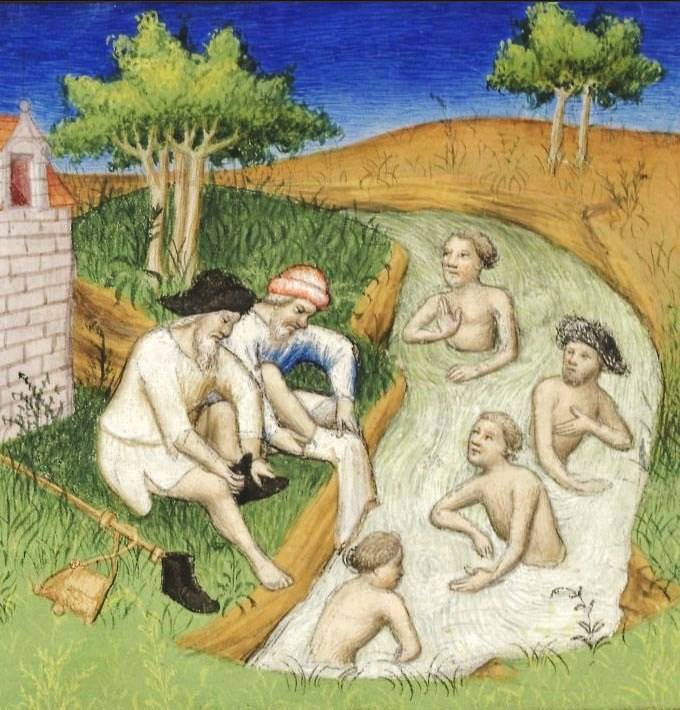
Today’s highlight is Lavacolla, a pleasant village with remnants of its rural and historic past. Aymeriac Picaud describes how medieval pilgrims would perform their ablutions in Lavacolla before entering the holy city of Santiago. This practice involves pilgrims washing themselves completely, something they probably hadn’t done in several weeks. Though we, on the other hand, will have had plenty of opportunities to stay clean, the village appears to have received its current name from the union of two words: lava (wash) and colla (genitals). This explanation has been debated and other more profane (and less fun) etymological explanations have been hypothesized, such as: field at the bottom of the hill. Let’s stick to the classic and fun explanation!