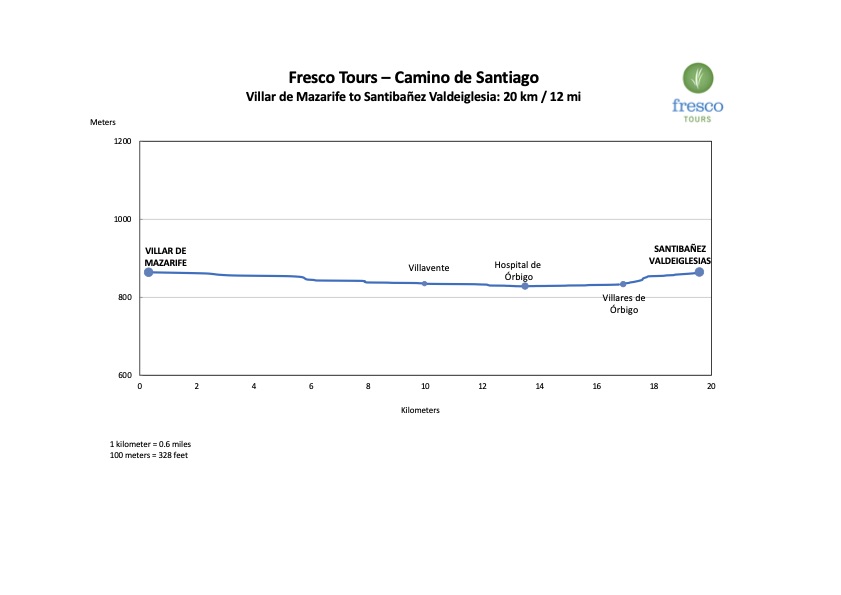
The path today winds through a series of small, peaceful villages—each one a gentle reminder of the rural heart of Castilla y León. The terrain is mostly flat, with open fields and distant views of the mountains that grow closer with each step.
After a few hours of walking, the landscape begins to shift, and soon you arrive at one of the most iconic landmarks on the Camino: the Puente de Órbigo. This magnificent medieval bridge, built in the 13th century, stretches gracefully across the Órbigo River and is considered one of the best-preserved in all of Spain. Its long, stone arches carry centuries of stories—of knights, pilgrims, and the legendary joust of Don Suero de Quiñones, who once defended the bridge for love and honor.
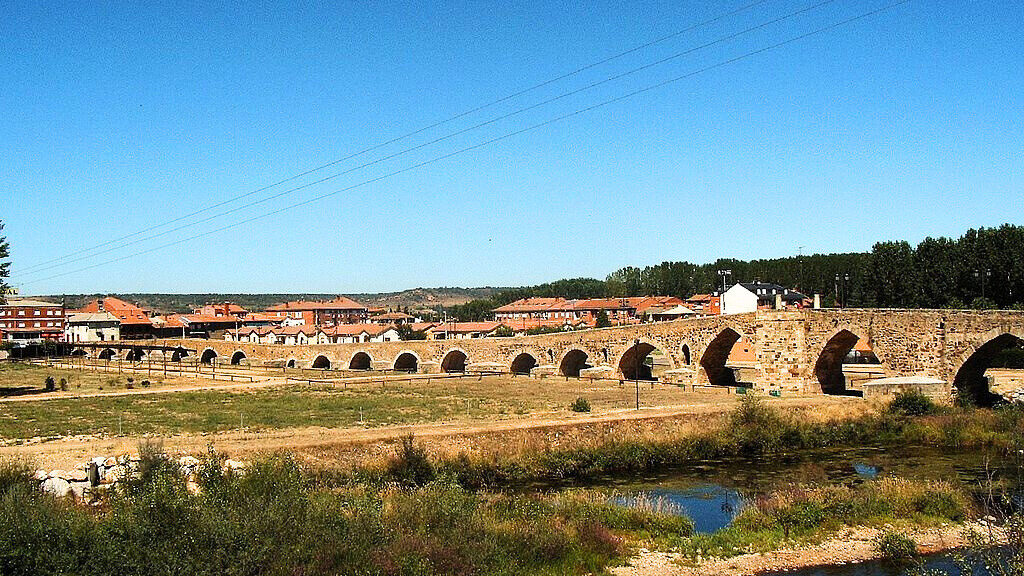
Crossing the bridge into Hospital de Órbigo feels like stepping into a living chapter of Camino history. But the journey continues, and the path leads you onward through more quiet Castilian countryside.
Your day ends in Santibáñez de Valdeiglesias, a small village nestled among fields and gentle hills. It’s a peaceful place to rest before heading to Astorga, where the Camino takes a turn toward the mountains and the rich cultural heritage of the Maragatería region.