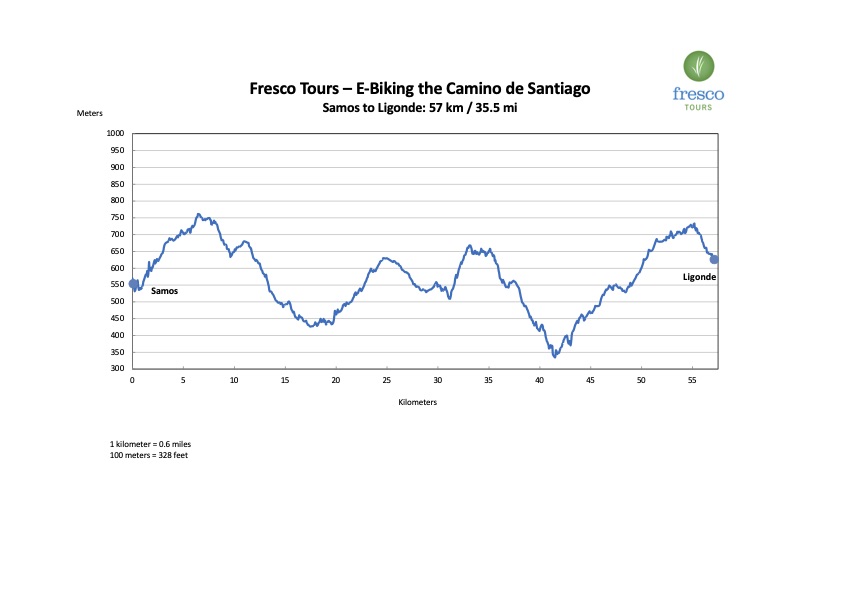
Today’s ride meanders through rural landscapes and brings us to the town of Sarria, named after the river that flows through it. There is an accepted hypothesis that the name’s origin comes from a Pre-Roman Gaelic tribe that settled in this region, the Seurri.
Sarria is also the unofficial starting point for pilgrims who only can or want to walk the last 100 kilometers, which are required by the Church to receive the Compostela certificate. So, it is a popular pilgrims’ town!
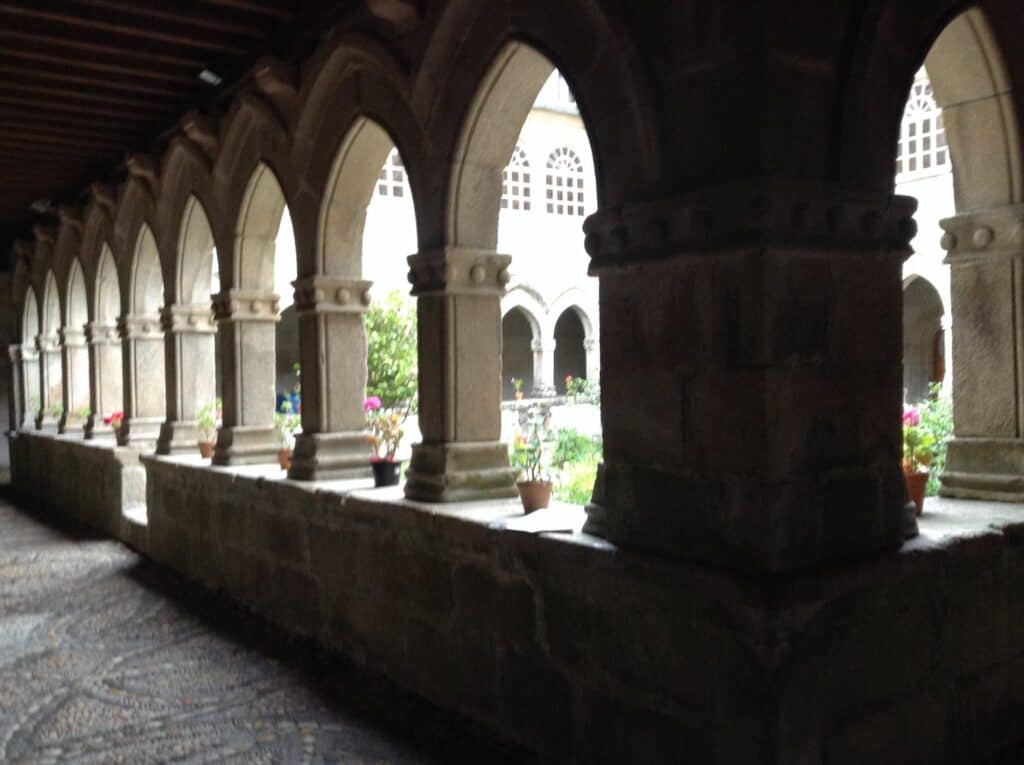
Perhaps Sarria’s best-known monument is the Mercedarian Monastery of the Magdalena (Magdalene). It is right at the top of the hill and features a Gothic structure that boasts a lovely cloister. The convent also offers a basic but decent pilgrims’ hostel. Note the interesting sculptures in relief by the main door, which depict the arrival of Mary Magdalene (hence the name of the convent) by boat to the city of Marseille, where she preached and lived until her death.
The Mercedarians (aka. Order of the Blessed Virgin Mary of Mercy)
This religious order was founded in the early 13th century by Saint Peter Nolasco after receiving instructions from the Virgin Mary. Its main mission, apart from monastic duties to God, was to pay the ransoms of captured Christians.
The ransoming of captives and the slave trade of captured Christians was a prosperous business during the Middle Ages (especially for the Muslim side, as they traded in slaves). Thus, pirate pillaging and plundering was a common occurrence throughout these times, especially in regions that were under Christian control. St. Peter Nolasco, concerned about the plight of these Christian captives, set up a network of monasteries throughout Europe that gradually became very successful, thanks to popular, noble and royal patronage. The order is reputed to have freed up to 70,000 captives, of which 2,700 were freed during the saint’s time.
Apart from the three classic monastic vows (obedience, conversion of life, and stability), the Mercedarians take a fourth vow, which is to give their life for someone who is in danger of losing their faith.
Before arriving to Portomarín, we cross the Ponte de Miño bridge, which provides some beautiful views of the valley and reservoir. If the water is low, typically in autumn, you may see some remains of the old town.
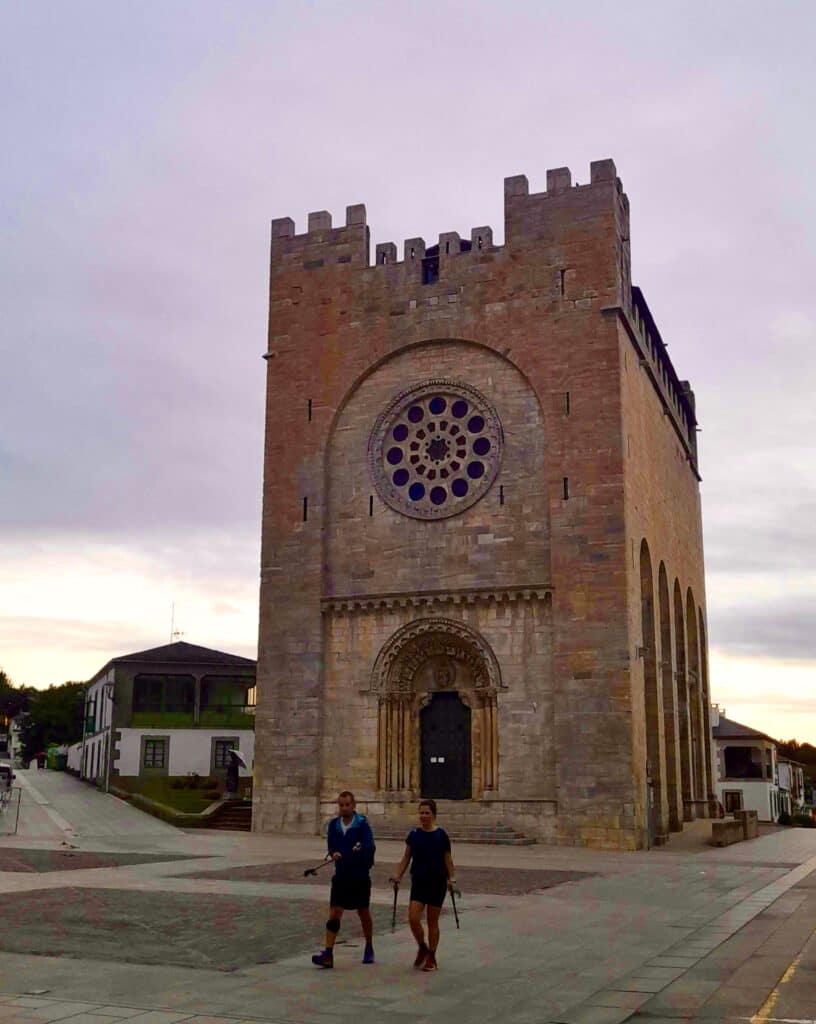
Upon arrival, one of the first things we notice about Portomarín is its location on the banks of the Miño River. We will see notable landmarks, including the Church of San Nicolás and San Juan, which was strategically designed by the local religious militia and authorities to have just one nave, so as to resemble a military keep. You will learn more about the fascinating history of this structure from our Fresco Tours guides. The west door depicts the Last Judgement, a favorite image amongst medieval sculptors and the Church, as this is the door the locals would have come through on their way to Mass.
The central square of Portomarín is a lively gathering place. Full of cafes, restaurants, and shops, where we can grab a coffee and even purchase souvenirs. Afterwards, we continue west, climbing the hill out of the valley. We will notice that a new kind of foliage has joined the lush landscape. As our Fresco Tours guides will explain, Eucalyptus trees have been introduced and cultivated in the area and can be used for many purposes, including forestry and paper production.
We will finally come across Ligonde, a small village that stands out from the rest because of the ancient granite cruceiro (stone cross) and the hundred-year-old oak tree that greets you as you enter town. The cruceiro dates from 1670, and depicts a crucifixion on one side, a pietá (a suffering Virgin Mother) on the other side, and an image of the instruments used during the passion of Christ on the base. The large oak tree has provided shade for countless pilgrims over the centuries. We have our evening meeting before sitting down for dinner to get ready for another day along The Way!