The Camino de Santiago, or the Way of St. James, is not a single path but an intricate network of ancient pilgrim trails that crisscross Europe, all converging at the magnificent Cathedral of Santiago de Compostela in the heart of Galicia, northwestern Spain. This extensive web of paths makes the question “Where is the Camino de Santiago?” both simple and profound. The Camino is everywhere a pilgrim’s journey begins, yet it culminates in one sacred destination.
This comprehensive guide will delve into the geography, history, and diverse routes of the Camino de Santiago, providing a definitive answer to its whereabouts and inspiring you to find your own starting point on this legendary pilgrimage.
The Heart of the Camino: Santiago de Compostela
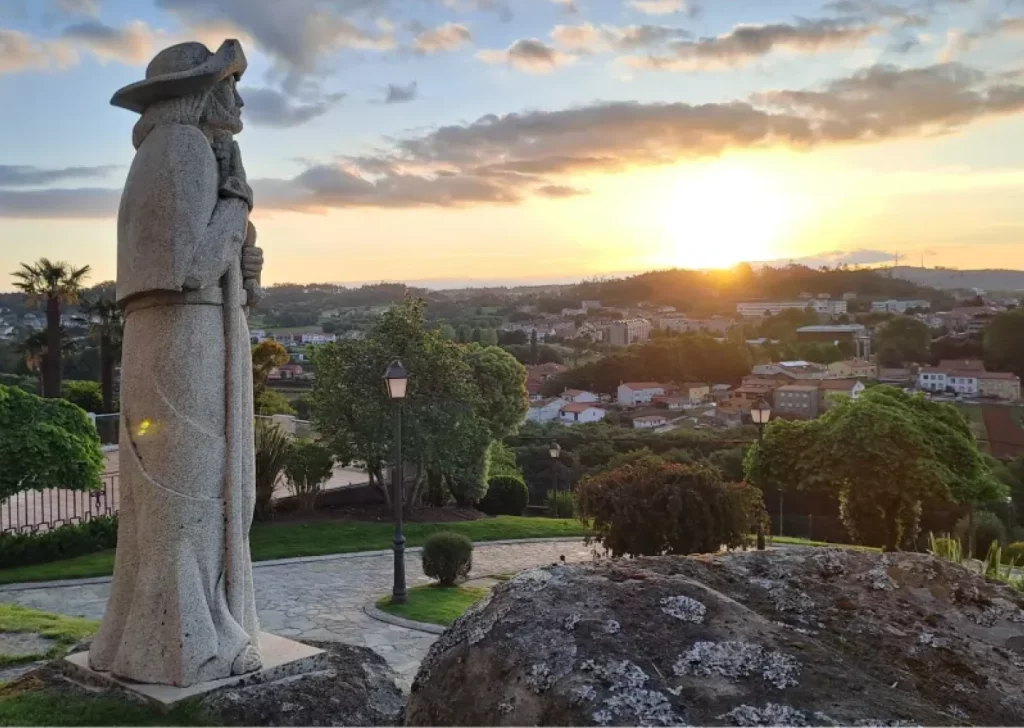
Before we explore the various “Ways,” it’s crucial to understand their common destination. Santiago de Compostela, the capital of the autonomous community of Galicia, is the ultimate goal of every Camino pilgrim. The city’s magnificent cathedral is believed to house the tomb of St. James the Greater, an apostle of Jesus Christ.
According to tradition, St. James preached in Spain and, after his martyrdom in Jerusalem in 44 AD, his disciples transported his body by boat to the Galician coast and buried him inland. His tomb was lost to history for centuries until, in the 9th century, a hermit named Pelayo was guided by a star to the burial site. The local bishop, Teodomiro, confirmed the discovery, and King Alfonso II of Asturias, the first recorded pilgrim, traveled to the site and declared the tomb to be of St. James.
This pivotal event marked the genesis of the Camino de Santiago. A small church was built over the tomb, which was later replaced by the grand Romanesque cathedral that stands today, a masterpiece of religious architecture that has welcomed countless pilgrims over the centuries. The entire Old Town of Santiago de Compostela was designated a UNESCO World Heritage site in 1985, a testament to its historical and cultural significance.
The Anatomy of a Pilgrimage: Understanding the Camino Network
The Camino de Santiago is best visualized as a river system, with numerous small streams (local paths) feeding into larger tributaries (major routes) that ultimately flow into Santiago de Compostela. These routes span thousands of kilometers, originating in various parts of Spain, Portugal, France, and even further afield in Europe.
The scallop shell, a symbol of St. James, are the ubiquitous markers that guide pilgrims along these paths, ensuring they stay on the right track. In Spain and Portugal, the yellow arrow is also commonly used. The choice of route and starting point is a deeply personal one, depending on factors such as available time, fitness level, desired scenery, and the type of experience a pilgrim seeks.
The Major Routes of the Camino de Santiago: A Detailed Exploration
While countless paths lead to Santiago, several major routes have gained prominence over the centuries due to their historical significance, infrastructure for pilgrims, and stunning landscapes. Let’s embark on a detailed journey through the most celebrated Caminos.
1. The Camino Francés (The French Way): The Classic Pilgrimage
When people speak of “The Camino,” they are most often referring to the Camino Francés. This is the most popular and well-known of all the routes, a UNESCO World Heritage site in its own right since 1993. Stretching approximately 800 kilometers from Saint-Jean-Pied-de-Port in the French Pyrenees to Santiago de Compostela, it is a journey that typically takes around a month to complete on foot.
The Geography of the Camino Francés:
The French Way traverses the diverse landscapes of northern Spain, offering a rich tapestry of cultures, cuisines, and historical sites. It can be broadly divided into several distinct geographical sections:
- The Pyrenees: The Camino Francés traditionally begins with a challenging but breathtaking crossing of the Pyrenees mountains from Saint-Jean-Pied-de-Port to Roncesvalles in Spain. This initial stage sets a dramatic tone for the pilgrimage.
- Navarre: After the mountainous terrain, the path winds through the rolling hills and vineyards of Navarre, passing through the vibrant city of Pamplona, famous for its running of the bulls.
- La Rioja: This world-renowned wine region offers a more gentle landscape of vineyards and fertile plains. Logroño, the capital of La Rioja, is a major stop for pilgrims.
- Castilla y León: This is the longest section of the Camino Francés, characterized by the vast, high-altitude plateau known as the Meseta. This seemingly endless expanse of wheat fields under a wide-open sky can be a meditative and deeply introspective part of the journey. The route passes through the historic cities of Burgos and León, both boasting magnificent cathedrals.
- Galicia: The final region of the Camino Francés is Galicia, a land of lush green hills, misty mornings, and a distinct Celtic heritage. The landscape becomes more undulating as pilgrims approach their final destination, Santiago de Compostela.
Key Towns and Cities on the Camino Francés:
- Saint-Jean-Pied-de-Port: The traditional starting point, nestled in the French Basque Country.
- Roncesvalles: A legendary site of battle and a significant monastic complex.
- Pamplona: A lively city with a rich history and a beautiful old town.
- Puente la Reina: A medieval town famous for its Romanesque bridge where the Aragonese and Navarrese routes converge.
- Logroño: The heart of the La Rioja wine region.
- Burgos: Home to a stunning Gothic cathedral, a UNESCO World Heritage site.
- León: Another city with a magnificent Gothic cathedral and a vibrant atmosphere.
- Astorga: A town with Roman roots and a palace designed by Gaudí.
- Ponferrada: Known for its impressive Templar castle.
- O Cebreiro: A charming mountain village in Galicia with traditional stone huts.
- Sarria: The most popular starting point for those wishing to walk the final 100 kilometers to Santiago, the minimum distance required to receive the “Compostela” certificate.

2. The Camino Portugués (The Portuguese Way): A Coastal and Central Journey
The Camino Portugués is the second most popular route, offering two main variants: the Central Way and the Coastal Way. Both routes begin in Portugal and head north to Santiago de Compostela, providing a unique cultural and scenic experience.
The Camino Portugués Central:
The traditional Central Way starts in Lisbon, covering a distance of approximately 610 kilometers. However, most pilgrims begin their journey in the charming city of Porto, a walk of about 240 kilometers that takes around 10 to 14 days.
- From Lisbon to Porto: This section is less frequented and signage is not as reliable. However, it offers a journey through the heart of Portugal, passing through historic towns like Santarém and Coimbra.
- From Porto: This is the most popular starting point. The route from Porto is well-marked and passes through rolling countryside, ancient Roman roads, and picturesque towns. It crosses the Minho River, the natural border between Portugal and Spain, at Valença do Minho, entering the Spanish town of Tui. From Tui, the path continues through the green landscapes of Galicia to Santiago.
The Camino Portugués Coastal:
For those who prefer the sea breeze and stunning ocean views, the Coastal Way is an excellent alternative. It also typically starts in Porto and follows the Atlantic coastline northwards.
- From Porto or Viana do Castelo: The Coastal Way hugs the shoreline, passing through charming fishing villages and offering beautiful beach scenery. After crossing into Spain by boat at Caminha, it finally joins the Central Way in Redondela, Spain, or continues along the coast for a longer stretch before heading inland towards Santiago.
Key Towns and Cities on the Camino Portugués:
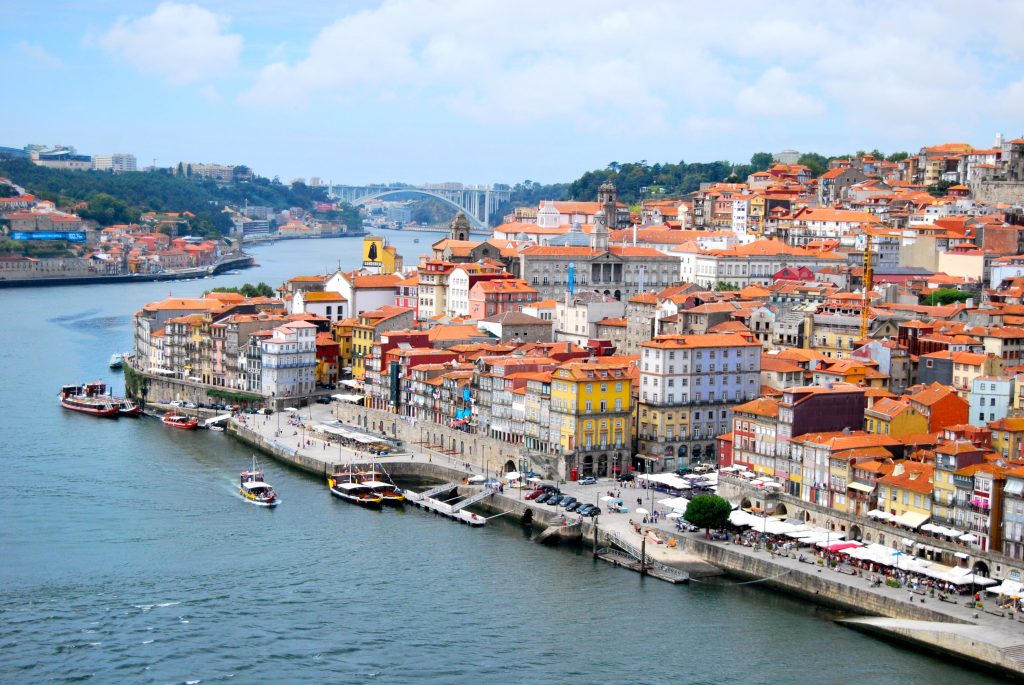
- Porto: A UNESCO World Heritage city famous for its port wine and stunning riverside setting.
- Viana do Castelo: A historic coastal Portuguese town on the River Lima.
- A Guarda: Another historic coastal town, this time in Spain and facing Portugal. This is your port of entry into Galicia.
- Pontevedra: A charming Galician city with a well-preserved medieval center.
- Padrón: A town with strong connections to the legend of St. James, as it is believed to be where the boat carrying his body landed.
3. The Camino del Norte (The Northern Way): A Rugged Coastal Beauty
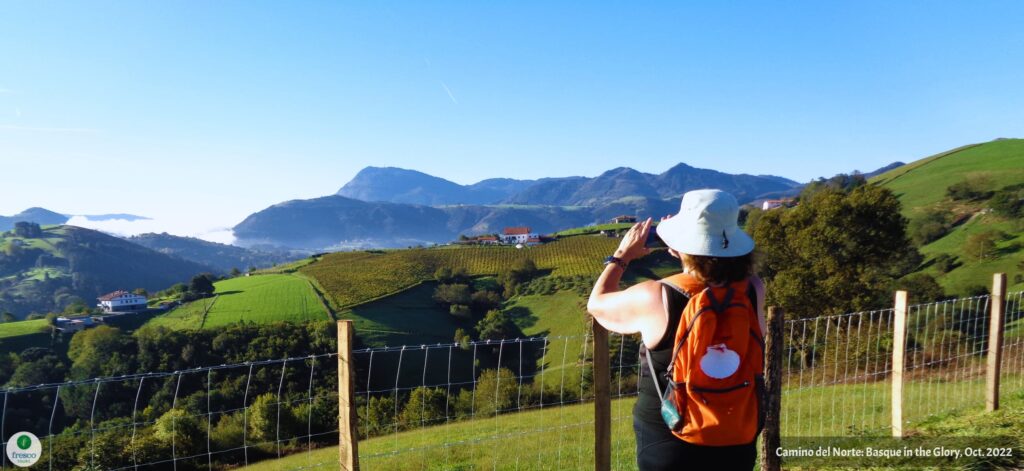
The Camino del Norte is a challenging but incredibly rewarding route. It follows the northern coast of Spain, offering breathtaking views of the Cantabrian Sea. It is one of the oldest Camino routes, used by pilgrims who arrived by land or sea from northern Europe. At approximately 825 kilometers, it is a demanding journey that takes over a month to complete.
The Geography of the Camino del Norte:
This route is characterized by its dramatic coastal landscapes, with lush green hills plunging into the deep blue sea. It traverses four autonomous communities:
- The Basque Country: The Camino del Norte begins in the border town of Irún and passes through the elegant city of San Sebastián, famous for its culinary scene, and the vibrant city of Bilbao, home to the Guggenheim Museum.
- Cantabria: The path continues along the coast, passing through charming fishing villages and the sophisticated city of Santander.
- Asturias: This region offers a stunning combination of coastal scenery and the dramatic peaks of the Picos de Europa mountains in the distance. The route passes through the historic cities of Gijón and Avilés.
- Galicia: In Galicia, the Camino del Norte heads inland at Ribadeo. We leave the coast behind and journey through the rural interior to join the Camino Francés in Arzúa.
Key Towns and Cities on the Camino del Norte:
- Irún: The starting point on the French-Spanish border.
- San Sebastián: A beautiful city with world-renowned beaches and cuisine.
- Bilbao: A major cultural and economic hub.
- Santander: An elegant coastal city with beautiful beaches.
- Gijón: A lively port city in Asturias.
- Ribadeo: A Galician town famous for the stunning Praia das Catedrais (Cathedrals Beach).
4. The Vía de la Plata (The Silver Way): A Journey Through Roman Spain
The Vía de la Plata is the longest of the main Camino routes, stretching over 1,000 kilometers from Seville to Santiago de Compostela. This ancient route follows a Roman road that was used for trade and military purposes. It is a less crowded and more solitary Camino, offering a journey through the heart of Spain’s history and diverse landscapes.
The Geography of the Vía de la Plata:
This route showcases a different side of Spain, away from the green north. It traverses:
- Andalusia: Starting in the vibrant city of Seville, the route heads north through the olive groves and historic towns of Andalusia.
- Extremadura: This region is known for its Roman ruins, particularly in Mérida, and its vast dehesas, a unique ecosystem of holm and cork oaks.
- Castilla y León: The route continues north, passing through the historic university city of Salamanca and the medieval town of Zamora. In Granja de Moreruela, the Vía de la Plata splits.
Key Towns and Cities on the Vía de la Plata:
- Seville: The capital of Andalusia, a city of flamenco, bullfighting, and stunning Moorish architecture.
- Mérida: Home to some of the most impressive Roman ruins in Spain.
- Cáceres: A beautifully preserved medieval city, a UNESCO World Heritage site.
- Salamanca: A vibrant university city with a magnificent Plaza Mayor.
- Zamora: Known for its Romanesque churches.
5. The Camino Primitivo (The Original Way): The First Pilgrimage
The Camino Primitivo is considered the first-ever Camino de Santiago. It follows the route taken by King Alfonso II in the 9th century from Oviedo to Santiago de Compostela. This is a challenging route of approximately 320 kilometers, known for its mountainous terrain and stunning natural beauty.
The Geography of the Camino Primitivo:
This route is for the more adventurous pilgrim. It traverses the rugged mountains of Asturias and Galicia, offering breathtaking scenery and a sense of solitude. The path is often steep and can be challenging in bad weather, but the rewards are immense. The Camino Primitivo joins the Camino Francés in Melide, about 50 kilometers from Santiago.
Key Towns and Cities on the Camino Primitivo:
- Oviedo: The capital of Asturias, a city with a beautiful pre-Romanesque cathedral.
- Lugo: A Galician city famous for its perfectly preserved Roman walls, a UNESCO World Heritage site.
6. The Camino Inglés (The English Way): The Maritime Route
The Camino Inglés was the route traditionally taken by pilgrims from Britain, Ireland, and other northern European countries who arrived by sea at the Galician ports of Ferrol or A Coruña. It is one of the shorter Camino routes.
- From Ferrol: This is the more popular starting point, as the route is approximately 120 kilometers long, allowing pilgrims to earn their Compostela Certificate.
- From A Coruña: This route is shorter, at around 75 kilometers, and does not qualify for the Compostela Certificate if you only walk the section in Spain.
Both routes converge and head south through the green Galician countryside to Santiago de Compostela.
Walking the Camino de Santiago with Fresco Tours
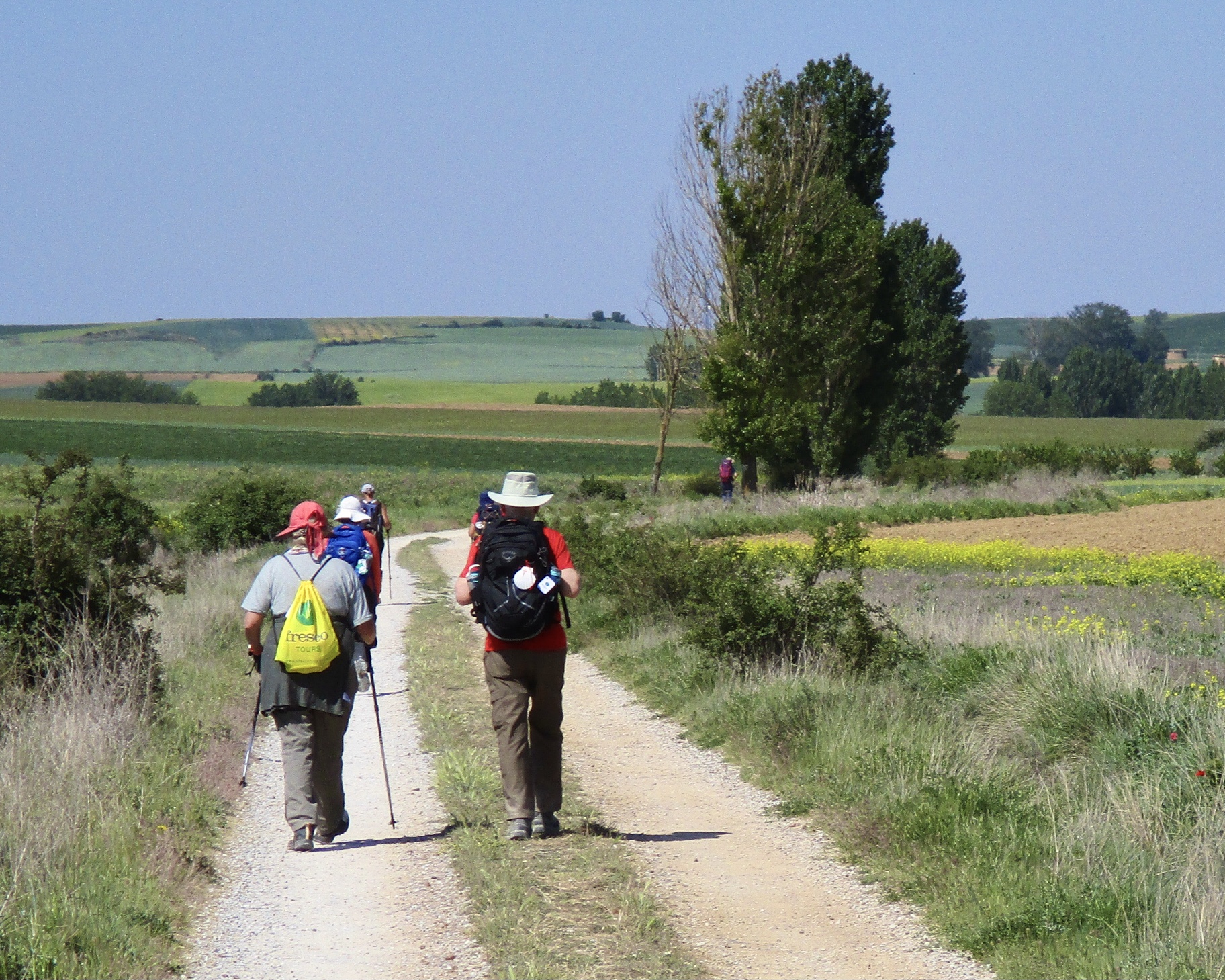
For those who wish to experience the magic of the Camino de Santiago with the comfort and support of a knowledgeable guide, Fresco Tours offers a range of carefully curated walking tours. Our tours are designed to allow you to immerse yourself in the journey without the logistical worries of accommodation, luggage transport, and navigating the route. Whether you are a seasoned hiker or a first-time pilgrim, Fresco Tours has an itinerary to suit your needs.