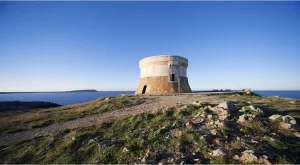

The Camí de Cavalls in Menorca is among the most extraordinary hiking experiences Spain has to offer. Renowned for its pristine coves and beaches—arguably the finest in the country—this historic trail connects them all in a continuous journey through natural splendor. We've carefully selected the most stunning sections for your enjoyment.
One of the true delights of the Camino de Cavalls Walking Holidays Tour is its remarkable diversity. This path reveals a natural paradise that extends far beyond the coastline—through ancient pine and oak forests, dramatic cliffs, serene coastal lagoons, and tranquil woodland trails. We spend four days exploring the untamed North and four days discovering the gentler South: the North, bold and dramatic like a Wagner symphony; the South, graceful and lyrical like Mozart.
Your two bilingual guides are either Spanish or year-round residents of Spain. This is our home, and we love to share it with you!
* Check What’s Included for specifics.
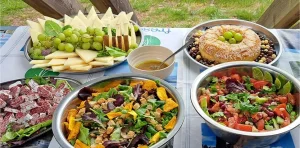
With all your meals included (B,L,D), except for one dinner, you only need to worry about enjoying the sights! Weather permitting, our gourmet picnic lunches showcase the freshest of local flavors. You’ll be impressed of how such a small Mediterranean island can involve such a wide variety of culinary recipes and ingredients.
One of the good news of the Menorca tour is that we are going to change accommodation just twice. The size of the island and the round shape of the trail permit us to undertake the whole tour with just three different locations, which makes up a good combination and a variety of experiences. Charming restored manor homes and 3-4 star hotels that offer the best in hospitality, comfort, and location.
You choose! Walk alone, knowing that we’ve got your back, or enjoy the company of others and your knowledgeable guides.
No need to carry a heavy pack – let us do the lifting while you do the walking.
Menorca is a hidden gem—arguably the best-preserved island in the entire Mediterranean. This tour has been thoughtfully crafted to immerse you in the island’s breathtaking landscapes, while offering an authentic experience of its paradise-like charm and the local culture.
Day 1
Accommodations: Sant Climent (D)
Meeting time: 3.00 PM
Day 2
Accommodations: Sant Climent rural area (B, L, D)
Distance: 13.5 km / 8 mi
Day 3
Accommodations: Sant Climent rural area (B, L, D)
Distance: 7 km / 4 mi
Day 4
Accommodations: Ferreries rural area (B, L, D)
Distance: 10 km / 6 mi
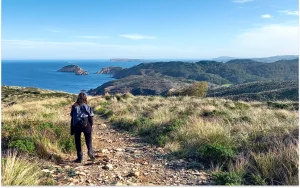
Day 5
Accommodations: Ferreries rural area (B, L, D)
Distance: 9 km / 6 mi
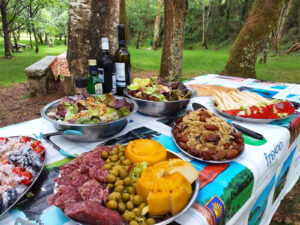
Day 6
Accommodations: Ferreries rural area (B, L, D)
Distance: 14 km / 9 mi
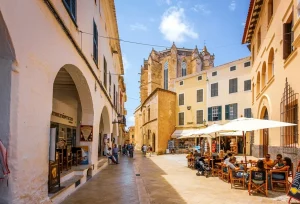
Day 7
Accommodations: Ciutadella (B, L, D)
Distance: 15 km / 9 mi
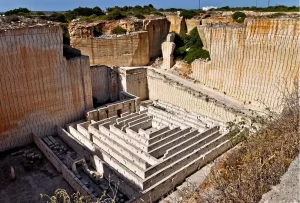
Day 8
Accommodations: Ciutadella (B, L)
Distance: 12 km / 7 mi
Day 9
Accommodations: Ciutadella (B, L, D)
Distance: 11 km / 7 mi
Day 10
Accommodations: Tour Ends (B)
Distance: 0 km / 0 mi
*Please note: This itinerary is subject to slight modifications due to hotel availability, weather, festivals, and other occurences.
Our greatest resource! We know Spain, because it is our home. Both of your guides are experienced professionals that are either Spanish or live in Spain year round – no hired out summer help! Having 2 guides means that we will be there to look out for your well-being, comfort, and safety. When specified, local art historians will join us to provide deeper insights into the specific monument or museum we visit.
*Groups of up to 6 people will be accompanied by one guide. Groups of 7 to 10 people will have one guide and one minibus driver, while groups of 11 or more will be accompanied by two guides and one minibus driver.
Fresco Tours are in small groups to ensure that you receive the individual attention that you deserve. In order to treat each of our clients with a personal touch, we limit our group size to a maximum of 16 participants, with a minimum of 4 participants required.
All guided visits, as indicated in your program, will be led by a local art historian, who will bring the monuments and cities to life!
Fresco Tours selects a combination of 3-4 star hotels, restored country manors and B&B’s that offer the best in hospitality, comfort and location. All rooms have their own bathrooms. Tour prices are based on double occupancy.
Food speaks volumes about a culture and we love to eat! On walking days, when possible, we prepare gourmet picnics using the freshest local ingredients and tastiest recipes of the region. Dinners are celebrated in the accommodation itself or in restaurants chosen not only for their menu, but also their atmosphere and service. All breakfasts, lunches and dinners are included, except for one dinner. We are proud to cater to vegetarians and those with food allergies as well.
Your walks will be accompanied by a support vehicle that will be there to provide assistance when the route permits. When groups are more than 10, in addition to the 2 guides, there will be a minibus & driver to care to your needs. The possibility of shorter routes and pick-up options will be explained on a daily basis.
Your luggage will be transported between hotels. You do the walking, we’ll do the lifting!
Cultural visits, garden tours, art centers, etc. as outlined in the itinerary.
We are here to help! Need assistance with how to get to island? Hotels prior to or after your trip? Do you want to enjoy a couple of days in Menorca after the tour? Questions about what to wear? Need a taxi while on the trail?
Based in Spain, we’re here to ensure your trip runs as smoothly as possible – we’re available to assist.
* Please note that additional services are subject to the following conditions:
Hotel reservations/Private transfers may be cancelled without penalty up to 1 week before arrival.
Extra luggage may be cancelled without penalty up to 7 days before arrival.
All ground transportation between the designated starting and finishing point of your Fresco Tour is provided. We will help facilitate information for your travel arrangements prior to and after the tour start and finish.
Airfare to and from Menorca, airport taxes / departure fees, visas, gratuities or tips, items of personal nature – laundry, phone, luggage surplus charges, medical expenses, bar, etc.
Prior to / After your Fresco Tour: Should your vacation to Spain be for more than a few days prior to or after your Fresco Tour, perhaps you would be interested in a Spain-taineous Custom Tour and personalized private itinerary. Let us know and we’ll create an itinerary tailored to your personal style and needs.
Menorca, often considered the crown jewel of the Balearic Islands, lies in the Mediterranean Sea and is renowned throughout Spain for its turquoise waters, scenic walking trails, and relaxed way of life. This island paradise spans just 27 miles at its widest point. With a rich history shaped by British, French, and Arabic influences, Menorca today marks the easternmost point of Spain.”
Reaching Menorca is likely easier than you might expect. The primary gateway is Barcelona, which offers more than five daily flights to the island. Other cities with regular direct flights include Madrid, Bilbao, Valencia, London, and Palma de Mallorca—the capital of the Balearic archipelago. The flight from Barcelona to Menorca takes approximately 25 minutes.
Our first accommodation is conveniently located near the airport. For your transfer, you have two options: local taxis are readily available just outside the terminal and typically charge around 20 euros. Alternatively, you may choose to pre-book your transfer by contacting your Client Service Manager.
Camí de Cavalls—literally ‘The Horse Way’—is a remarkable walking trail that encircles the entire island of Menorca, winding from cove to cove and through a variety of forested landscapes. The full route spans 183 kilometers and has grown increasingly popular in recent years, thanks to improved signage and accessibility. For the Menorca Tour, we have carefully selected the most scenic and rewarding sections of this historic trail.
The Camí de Cavalls is far more than a spectacular hiking trail—it has deep historical and strategic roots. Centuries ago, the path was created by locals as a defensive perimeter to protect the island’s coastline from potential invaders. Mounted guards patrolled the route, keeping watch over the horizon. Over time, every culture that settled on the island—British, French, and Spanish alike—helped maintain and restore the trail to safeguard Menorca’s shores.
Menorca benefits from a Mediterranean climate, with warm and dry summers, and mild temperatures during the spring and autumn months—particularly March, April, October, and November. The island experiences less rainfall and generally warmer conditions compared to northern Spain. For current weather conditions and average monthly temperatures in Menorca, please click here.
After breakfast, we lace up and make our way to the trailhead. Transfers are normally quick in a small island like Menorca. We walk in the morning for about 2 to 4 hours, before indulging in a gourmet picnic lunch prepared with the freshest local ingredients. On some days, we walk 1 or 2 more hours after lunch to burn off dessert.
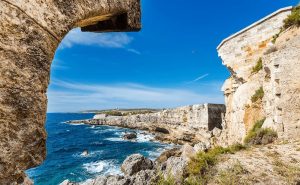
In the afternoon, we return to our hotel, where we have time to shower, rest, and relax. The day concludes with a glass of red wine and a meal featuring local cuisine. We then retire for the night, ready to repeat the experience the next day. On certain days, we have scheduled cultural activities, such as visiting a historic military fort with stunning panoramic views, exploring the island’s most artistic neighborhoods, and touring the artistic quarry of Lithica.
The Menorca Tour is well-marked, allowing participants to walk at a pace that suits them—this is not a race! We recognize that the inviting turquoise waters will be a temptation along the way, and of course, there will be time to enjoy them.
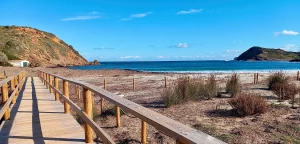
The terrain on the Menorca Tour is primarily on dirt trails, some of which can present small challenges because of uneven and rocky surfaces. Almost the whole walk (85%) follows these coastal trails. Although there are no major elevation gains and descents, appropriate footwear is recommended.
There are no true mountains on the Menorca Tour, with the highest elevation being only 360 feet above sea level. However, the trail is not entirely flat, and we will encounter some inclines and declines along the way.
The daily distance on the Menorca Tour ranges from 7 to 15 kilometers (4 to 9 miles). The total planned walk covers 99 kilometers (61 miles), but we can adjust the daily distances to meet your needs.
Although we will encounter some services along the way, these will not be as many as on our Camino de Santiago tours that you may be familiar with.
The trail is well marked and easy to follow. Wooden markers at regular intervals indicate the correct route allowing you to walk at your own pace. More than 3,000 markers can be found along the trail.
The Menorca trail offers an incredible experience, filled with natural beauty and renowned in Spain for having the country’s best coves and beaches. This route connects them all, providing an impressive, scenic walk.
Additionally, the island offers great diversity, with surprises around every corner, from dense forests to cultural and historical landmarks. The North is wild, rugged, and more isolated, while the South is calmer, more scenic, and filled with coves. To sum it up, the North is like a Wagner symphony, while the South is more like Mozart.
On the Menorca Tour, we provide a Fresco Tours laundry service approximately halfway through the trip, allowing you to send your clothes to a laundromat for washing and drying. Additionally, some hotels offer laundry services. As on other tours, we also recommend bringing quick-drying clothes.
Firstly, on the Menorca Tour we only change accommodation twice. The size of the island and the round shape of the trail permit us to stay at just three hotels.
Secondly, given the size of the island and the circular shape of the route, we have more flexibility in choosing which stage to complete each day. There is an official walk for each day of the tour, but the guides may adjust the order of the sections based on the weather forecast to ensure you have the best possible experience. We ask that you remain flexible with these changes.
Once you book your tour, we strongly advise you purchase comprehensive travel insurance that includes trip cancellation / interruption. You may also want to look into a Cancel For Any Reason add-on. Even the best adventure deserves a backup plan! We suggest using TravelInsurance.com, which allows you to compare and assess top insurance provider policies and their different coverage plans. Keep in mind that some travel insurance policies must be purchased within a specific time frame – often within a few weeks of booking your tour.
*In accordance with Spanish law and for the duration of your tour with Fresco Tours, you are covered by a very basic insurance provided by Intermundial.
Footwear is a personal choice, depending on your activity level and the support you need. Since we’ll be walking on dirt trails, comfort is crucial to avoid blisters. Due to the sometimes rocky and uneven terrain, we highly recommend footwear that covers the ankle. However, it’s important that the shoes are not too heavy and provide good grip. Running shoes are not ideal for this walk. Most importantly, ensure your shoes are well broken in before the tour!
It is always a good idea to bring hiking poles, as they can provide extra support. Some sections have little shade, so a hat may be useful. The northern side of the island can sometimes be quite windy, so a wind-stopper jacket would be helpful. And, of course, don’t forget your swimsuit to enjoy the stunning coves and beaches of Spain.
The Menorca Tour presents some hiking challenges due to the terrain and the occasional long distances without services. As such, it may not be the best option for a first-time hiker, as you’ll need to be comfortable navigating rocky terrain and walking without external support for certain stretches. Keep in mind that during the walk, one of the two guides will be on the trail with the group to ensure everyone’s safety. Additionally, we’ve arranged checkpoints along the way with our support van, where you can get water, a change of shoes, or take a break. In most cases, you’ll encounter the van two or three times throughout the walk.
Thank you for choosing to travel with Fresco Tours! We are very excited for you to join the ranks of our Happy Customers. If at any moment you should have any questions or concerns, please do not hesitate to contact us. Thank you again and we look forward to sharing memories of a lifetime with you.
To join us on a Fresco Tour, please visit our Secure Online Reservation Form or download and print a PDF version of the Reservation Form, one for each participant. To guarantee your spot and reserve space on a tour, a 15% deposit per person is required and payment should be made via credit card (Visa or MasterCard only), bank transfer or via Wise transfer. The balance of your tour payment is due 60 days prior to the departure date. If the tour that you selected begins within 60 days of booking, final payment is due at that time. Failure to receive the remainder of your trip balance by the due date will be considered a cancellation.
Once Fresco Tours has received your registration form and tour deposit, we will send you an email with an invoice of payments received and your remaining balance, a copy of our Assumption of Risk / Liability Waiver Form and a link to your Guest Questionnaire. These last 2 items must be returned 60 days prior to the start of tour. In addition, we will send you a Confirmation Packet with information regarding suggestions on preparation, a packing and reading list and other tips to get you excited and prepared for your Fresco Tour.
Once we have received final payment, the signed Assumption of Risk / Liability Waiver Form and Guest Questionnaire, you will be sent a receipt and final details regarding your tour, including a detailed itinerary and the hotel contact list.
Due to the nature of the accommodations we use, there are a limited number of single rooms available. Requests for these rooms are based on availability. Please see the tour itinerary for the cost of this fee. In some cases, it may imply a room smaller in size than a standard double room. If you are traveling alone, and would like to share a room, we will do our best to match you with a same-gender roommate.
All cancellations must be made in writing. No refunds will be issued due to late arrival, early departure, or any unused portion of a tour. The Assumption of Risk / Liability Waiver form must be signed and received 60 days prior to tour departure or the reservation will also be treated as a cancellation. We strongly recommend trip cancellation insurance to offset the chance you may need to cancel.
| Time | Price |
|---|---|
|
Cancellations received 151 or more days prior to trip start |
10% of trip price |
|
Cancellations received 150 – 91 days prior to trip start |
15% of trip price |
|
Cancellations received 90 – 46 days prior to trip start |
50% of trip price |
|
Cancellations received 45 days or less prior to trip start |
100% of trip price |
*Please note that cancellation terms for Spain-taneous Private Tours may vary. For more details, please contact your tour organizer.
Fresco Tours reserves the right to change, modify, or cancel a tour prior to departure for any reason, including lack of participants (tour minimum: 4 passengers) or acts of nature and/or circumstances beyond our control. In this case, any payments received will be refunded in full, and this will constitute full settlement. In this case, any payments received will be refunded in full, and this will constitute full settlement. Fresco Tours is not responsible for any additional expenses due to a canceled tour, such as the purchase of non-refundable airline tickets.
Fresco Tours reserves the right to accept, refuse, or decline any tour member’s participation at any time for any reason. In such a case, Fresco Tour’s liability is limited to the actual cost of the unused services.
If we are notified of a change to your scheduled tour date 6 months prior, you can apply your tour deposit to another departure date without penalty. This change can be up to 1 calendar year in advance and is subject to availability. Otherwise, the above Cancellation Fees will be applied.
As Spain-taneous Private Tours are custom built and created with specific dates in mind, any modifications will incur a 15% surcharge.
In accordance with Spanish law and for the duration of your tour with Fresco Tours, you are covered by a basic insurance provided by Intermundial. We strongly advise the purchase of a more comprehensive travel insurance that includes trip cancellation / interruption. You may also want to look into a Cancel For Any Reason add-on. We suggest using Travelinsurance.com, which allows you to compare and assess top insurance provider policies and their different coverage plans. Keep in mind that some travel insurance policies must be purchased within a specific time frame—often within a few weeks of booking your tour.
Do you have questions?
Our team is happy to answer your questions and help you plan your adventure of a lifetime.
Do you have questions?
Our team is happy to answer your questions and help you plan your adventure of a lifetime.
Guided
10 days / 9 nights
95 km / 59 mi
Balearic Islands
Level 4 - Moderate-Challenging
If you are looking for 2027 tours, please contact us before booking the tour.
Price per person based on double occupancy
$5,705.66
* USD$ price based on current exchange rate
Single Supplement Fee
699 €
Can’t find a date that works for you? Check out these other tours!
Still have questions?
We’re here to help. Whether you need more details or just want to talk things through, feel free to reach out.
No pressure, just answers.



© 2006–2026 Fresco Tours (CIE 2368). All Rights Reserved. Images on this website are property of Fresco Tours. Website Updated: July, 2026.
Adding {{itemName}} to cart
Added {{itemName}} to cart